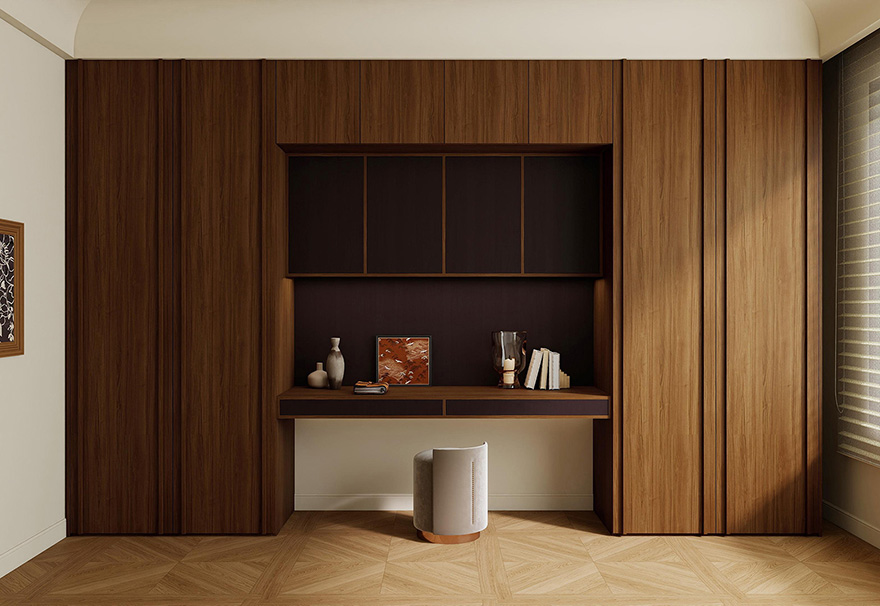
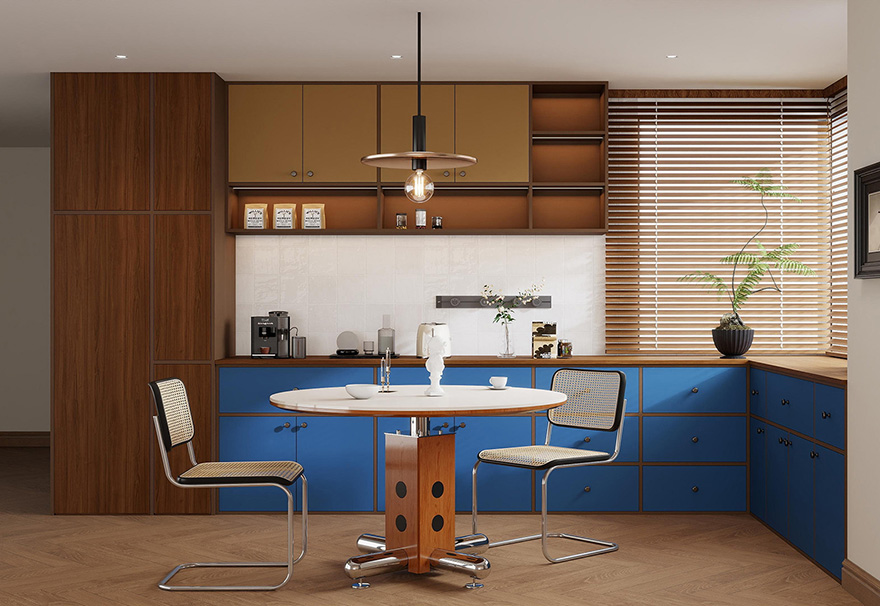
Many people believe that the lifespan of the board depends on its quality. Is ENF grade board necessarily more durable than E0 grade? Are imported boards necessarily more durable than domestically produced boards? No. The lifespan of the board is 70% determined by the areas you cannot see. The first place that cannot be seen: hardware. Hinges, slides, handles, and connectors - these are the components that the cabinet is subjected to every day. No matter how good the board is, the hinge will loosen after two years of use, and the door panel will still sag and not close tightly. Many people spend a lot of money choosing boards, but save money on hardware, which is putting the cart before the horse. Good hardware can keep cabinets used for five to ten more years, while poor hardware can be scrapped in two years. The second one that cannot be seen
The customized cabinet has been in use for a year, but the door panel has warped; The kitchen hanging cabinet has been stored for two years, and the shelves are bent; The bottom of the bathroom cabinet has become moldy and blackened. Almost every family has encountered these problems, but few truly understand the reasons behind them. The first reaction of most people is that the quality of the board is poor, but the truth is often not that simple. Problem 1: The deformation of the board may not necessarily be caused by the pot made of the board. The first major culprit of sheet metal deformation is actually installation. No matter how good the board is, if there are not enough expansion joints reserved during installation, stress will be released when encountering humidity changes, manifested as bending, warping, and cracking. Especially at the border between the north and south, or in environments with underfloor heating
When buying boards, you spend a lot of time researching environmental grades, substrate types, patterns and textures, but you most likely overlook one thing - edge banding. In fact, edge sealing is the key to determining how long the board can last. Many cabinets have problems after two or three years of use, not because the boards themselves are not good, but because the edges have collapsed first. What exactly is border sealing preventing? Three things: waterproof, moisture-proof, and formaldehyde locking. The interior of the substrate of the board is like a sponge, and once water vapor seeps in from the edges, it will expand, mold, and layer. And a large part of formaldehyde release comes from the cross-section and gaps. Edge banding is to put a layer of armor on the board and remove everything
Total:3
Total Pages:1 |
Page1 9First Page 7Previous Next8 Last Page:
Jump